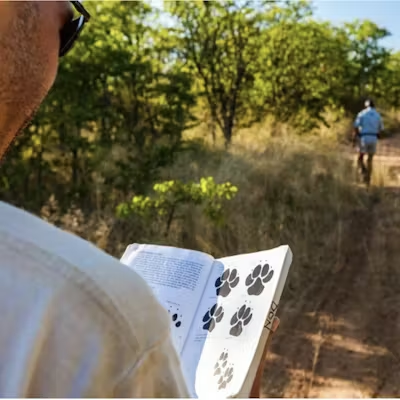
The B.Sc. Wildlife (Honours) program is an advanced undergraduate degree that provides in-depth scientific knowledge of wildlife biology, ecology, and conservation. The honours specialization prepares students for research-oriented, technical, and leadership roles in wildlife management, forestry, environmental conservation, and ecological sciences.
Affordable tuition, financial aid, and scholarships to make your education attainable.
Fully accredited programs ensuring your degree is respected and recognized globally.
A wide range of programs in arts, sciences, business, and technology to fit your career goals.
Proven success with high employment rates and graduates at top companies worldwide.
The Honours in Bachelor of Science in Wildlife is a rigorous, research-driven program designed for students passionate about wildlife, biodiversity, forest ecosystems, and environmental conservation. This honours degree deepens scientific understanding and practical skill development in wildlife biology, ecology, environmental science, and habitat management.
The curriculum includes a strong foundation in zoology and ecology while offering specialized knowledge across essential wildlife domains.
With an Honours focus, students engage extensively in research projects, field surveys, internships, dissertations, and scientific documentation. The program emphasizes field-based learning through visits to national parks, sanctuaries, biosphere reserves, zoos, rescue centres, research institutes, and environmental NGOs.
Students gain hands-on experience in wildlife tracking, ecological sampling, species monitoring, habitat mapping, wildlife census techniques, and biodiversity assessment. The honours component strengthens their analytical thinking, research methodology, scientific writing, and understanding of conservation policies at national and global levels.
Upon graduation, students are well-prepared for careers in wildlife conservation, forest services, environmental research, ecological consulting, protected area management, NGOs, and further higher studies like M.Sc. Wildlife Science, Ecology, Forestry, Zoology, and related fields.

Wildlife Biologist
Wildlife Researcher / Research Assistant
Conservation Scientist
Wildlife Ecologist
Forest Range Officer / Forester (through competitive exams)
Advanced Scientific Knowledge
Demonstrate deep understanding of wildlife biology, ecology, conservation science, and ecosystem dynamics.
Research Competence
Conduct scientific research, field surveys, ecological assessments, and data analysis with accuracy and ethics.
Fieldwork Proficiency
Use tools and methods for wildlife tracking, population studies, habitat evaluation, and biodiversity monitoring.
Application of Technology
Utilize GIS, GPS, remote sensing, and ecological software for wildlife mapping and research activities.
Conservation Leadership
Develop strategies for species protection, habitat restoration, and mitigating conservation challenges.
Policy & Legal Knowledge
Understand wildlife laws, protected area regulations, environmental frameworks, and global conservation policies.
Communication & Scientific Writing
Prepare research reports, conservation documents, presentations, and scientific publications effectively.
Problem-Solving & Critical Thinking
Address real-world environmental challenges such as habitat loss, climate impacts, poaching, and human–wildlife conflict.
Ethics & Sustainability Awareness
Demonstrate respect for biodiversity, ethical practices in wildlife handling, and commitment to sustainable conservation.
Career & Higher Education Preparation
Build a strong academic and research foundation for careers in wildlife sciences, forestry services, conservation, NGOs, and advanced postgraduate studies.