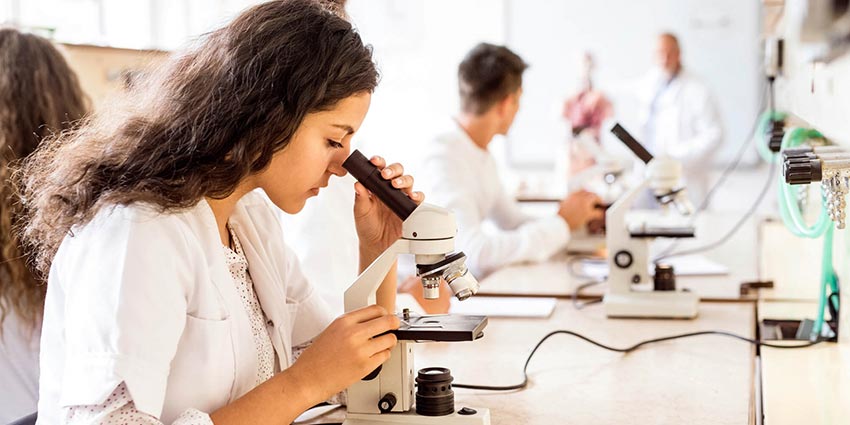
M.Sc. in Microbiology a two year postgraduate program takes a broader approach, focusing on manipulating living organisms or their components to create useful products or processes it delves deeper into the microscopic world of bacteria, viruses, fungi, and parasites. It emphasizes understanding their biology, physiology, and interactions with other organisms and the environment.
Affordable tuition, financial aid, and scholarships to make your education attainable.
Fully accredited programs ensuring your degree is respected and recognized globally.
A wide range of programs in arts, sciences, business, and technology to fit your career goals.
Proven success with high employment rates and graduates at top companies worldwide.
M.Sc in Microbiology is a 2-year postgraduate degree pogram that focuses on the application of biological processes to develop new products and technologies in various fields like Healthcare, Agriculture, Food, Energy, and Environmental Science. The course covers subjects like Immunology, Environmental Biotechnology, Advanced Biological Chemistry, Molecular Biology, and Animal Biotechnology to develop innovative solutions and products M. Sc in Biotechnology and M.Sc in Microbiology students can seek careers in industries such as Research firms, Chemical manufacturers, Hospitals, Educational institutes, Pharmaceuticals, Fertilizer manufacturers, etc. Some popular MSc Biotechnology and M.Sc in Microbiology jobs are Biotech Analyst, Research Scientist, Biochemist, Epidemiologist, etc.

1. Advanced Microbial Knowledge
Develop in-depth understanding of bacteria, viruses, fungi, and other microorganisms.
2. Laboratory Proficiency
Gain hands-on experience in microbiological techniques, culturing, and diagnostic methods.
3. Research Competency
Design, conduct, and analyze microbiological research effectively.
4. Clinical & Medical Understanding
Understand the role of microorganisms in human health and disease.
5. Industrial Application Skills
Apply microbiological principles in pharmaceutical, food, and fermentation industries.
6. Environmental Awareness
Study the role of microorganisms in environmental sustainability and waste management.
7. Molecular Biology Techniques
Use advanced molecular and genetic tools in microbial analysis.
8. Data Analysis Ability
Interpret laboratory results using statistical and scientific methods.
9. Quality Control & Safety Practices
Follow biosafety, quality assurance, and laboratory standards.
10. Ethical Responsibility
Practice ethical conduct in research and industrial applications.
11. Communication Skills
Present scientific findings clearly through reports and presentations.
12. Career & Higher Study Preparation
Prepare for employment in research, healthcare, industry, and doctoral studies.