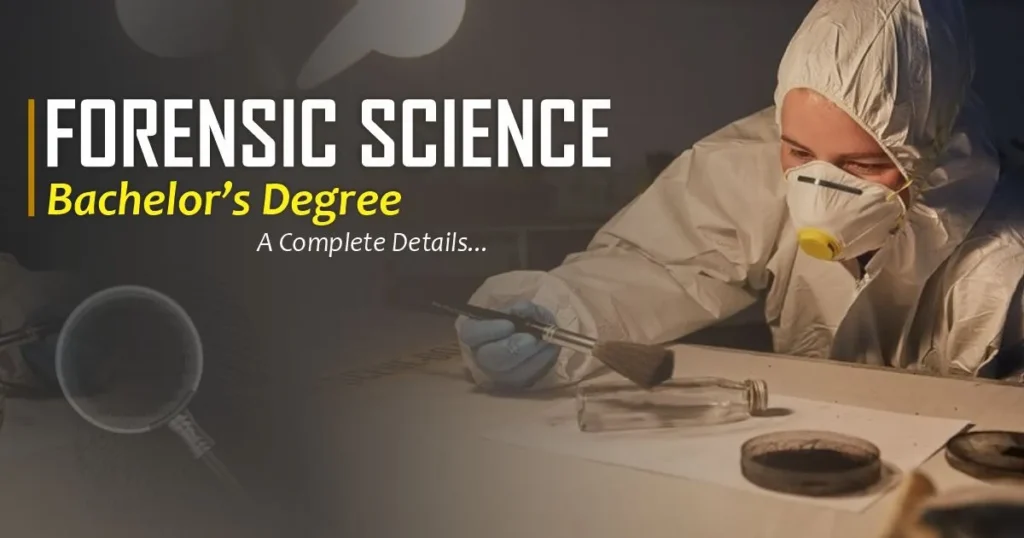
Master’s In Forensic Science

Master's in Forensic Science is a postgraduate program that trains students in the scientific methods used for crime investigation and evidence analysis, combining forensic science techniques with legal and investigative procedures. The course emphasizes laboratory skills, crime scene investigation, and analytical thinking required for modern forensic practice.

Programme Code
MFS-022
Duration
2 Years
Programme
Post Graduate Programme
Department
Department of Science

Your Career Path Begins Here

Affordability

Affordable tuition, financial aid, and scholarships to make your education attainable.

Accreditation

Fully accredited programs ensuring your degree is respected and recognized globally.

School Programs

A wide range of programs in arts, sciences, business, and technology to fit your career goals.

Track Record

Proven success with high employment rates and graduates at top companies worldwide.

ABOUT THE PROGRAMME

Master’s in Forensic Science is an advanced postgraduate program designed to provide in-depth knowledge of forensic techniques used in criminal investigations. The course integrates scientific principles with legal procedures to help students analyze physical evidence such as fingerprints, DNA, bloodstains, firearms, toxic substances, and digital data.

The program covers core areas including forensic biology, forensic chemistry, toxicology, questioned document examination, cyber forensics, ballistics, and crime scene investigation. Emphasis is given to laboratory work, evidence handling, analytical methods, and report writing in accordance with legal standards.

This course prepares students to work closely with law enforcement agencies, forensic laboratories, judicial systems, and research institutions, enabling them to contribute effectively to crime detection, investigation, and justice delivery.

Programme Fee Per Year
₹ 42000
Eligibility Criteria
Requires a bachelor’s degree in science (B.Sc.), Engineering, Pharmacy, or Medicine with 50-60% aggregate marks from a recognized university
Admission Procedure
3rd Year Syllabus
4th Year Syllabus
5th Year Syllabus

Career Paths

  • Forensic Scientist,
  • Crime Scene Investigator
  • Forensic Psychologist
  • Forensic Pathologist
  • Forensic Ballistics Expert
  • Analyze firearms
  • ammunition
  • gunshot residue
  • Digital Forensic Analyst
  • Toxicologist

Program Outcomes (PO)

  • Forensic Science Knowledge

    Apply advanced theoretical and practical knowledge of forensic science, including crime scene investigation, forensic biology, chemistry, and toxicology.

  • Crime Scene Investigation Skills

    Identify, collect, preserve, and document physical evidence using standard forensic protocols and legal procedures.

  • Analytical & Laboratory Skills

    Perform scientific analysis of physical, biological, and chemical evidence using modern forensic instruments and techniques.

  • Research & Problem-Solving Ability

    Conduct independent forensic research, analyze complex cases, and apply scientific reasoning to solve criminal investigations.

  • Legal & Ethical Understanding

    Demonstrate knowledge of criminal law, court procedures, and ethical standards related to forensic science practice.

  • Digital & Cyber Forensics Skills

    Apply principles of digital forensics and cybercrime investigation for the examination of electronic evidence.

  • Documentation & Reporting Skills

    Prepare accurate forensic reports, maintain proper chain of custody, and present scientific findings clearly.

  • Communication & Expert Testimony

    Communicate forensic results effectively and provide expert testimony in courts of law.

  • Professional Skills & Teamwork

    Work efficiently in multidisciplinary teams with law enforcement agencies and forensic laboratories.

  • Lifelong Learning & Professional Development

    Engage in continuous learning to adapt to advancements in forensic technologies and investigative methods.

  • Quality Assurance & Standardization

    Apply quality control measures, standard operating procedures, and accreditation standards in forensic laboratories to ensure accuracy and reliability of results.

  • Social Responsibility & Professional Ethics

    Demonstrate integrity, ethical conduct, and social responsibility while contributing to justice, public safety, and the legal system through forensic practice.

Our ekit SCHOOL courses

What do you want to learn today?

Your Complete Guide to Photography

A small river named Duden flows by their place and supplies it with the necessary

Learn Python – Interactive Python

A small river named Duden flows by their place and supplies it with the necessary

Introduction to Edu_Learn LMS Plugin

A small river named Duden flows by their place and supplies it with the necessary

Your Complete Guide to Photography

A small river named Duden flows by their place and supplies it with the necessary

Learn Python – Interactive Python

A small river named Duden flows by their place and supplies it with the necessary

Introduction to Edu_Learn LMS Plugin

A small river named Duden flows by their place and supplies it with the necessary

Get in Touch