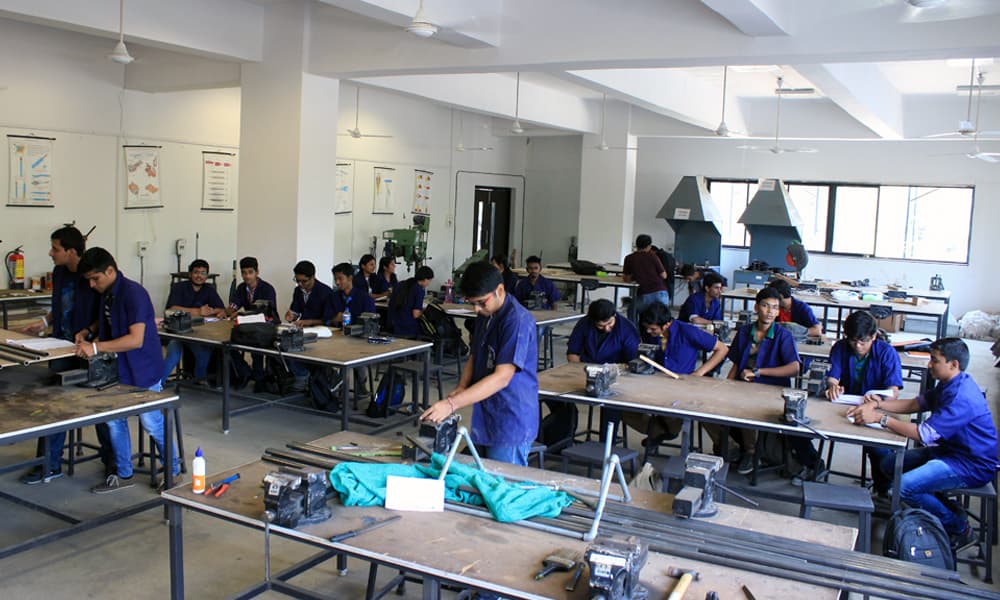
Bachelor of Engineering (B.Tech.) is a four-year professional undergraduate program that develops theoretical and practical knowledge in various engineering fields. The program prepares students to design, analyze, innovate, and manage engineering systems, enabling them to work in core industries, technology sectors, research, and government engineering roles.
Affordable tuition, financial aid, and scholarships to make your education attainable.
Fully accredited programs ensuring your degree is respected and recognized globally.
A wide range of programs in arts, sciences, business, and technology to fit your career goals.
Proven success with high employment rates and graduates at top companies worldwide.
The Bachelor in Engineering (B.E.) is a comprehensive technical degree focused on the principles of engineering, applied sciences, mathematics, and problem-solving. The program aims to create engineers who can contribute to industrial growth, technological innovation, and infrastructure development.
Students choose from various engineering specializations such as:
Civil Engineering
Mechanical Engineering
Computer Engineering / IT
Electrical Engineering
Electronics & Communication Engineering
Automobile Engineering
Chemical Engineering
Aeronautical Engineering
Mining Engineering
Biotechnology Engineering
Students learn to apply scientific concepts, modern tools, and creative thinking to solve engineering problems. The program ensures strong technical foundation, communication skills, teamwork, ethics, and real-world engineering experience.

Core Engineering Roles
Engineering Knowledge
Apply mathematics, science, and engineering fundamentals to solve complex engineering challenges.
Problem Analysis
Identify and analyze technical problems using scientific principles and structured approaches.
Design Skills
Design systems, components, and processes that meet technical, environmental, and safety standards.
Modern Tool Usage
Use advanced engineering tools, software, and simulation technologies effectively.
Experimentation & Research
Conduct laboratory experiments, analyze results, and interpret scientific data.
Professional Ethics
Follow ethical codes of engineering practice, safety norms, and professional responsibilities.
Teamwork & Communication
Work effectively in teams and communicate technical information clearly.
Project & Finance Management
Understand engineering management, project planning, cost control, and leadership.
Environmental & Social Awareness
Apply sustainable engineering principles considering societal and environmental impact.
Lifelong Learning
Continuously update skills through new technologies, certifications, and advanced studies.